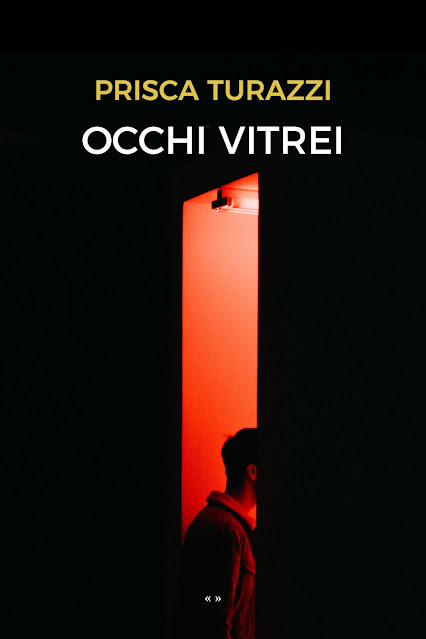
SUMMARY
Sara, who lives with a severe disability, has a secret. To her, books are more than ink printed on ivory-toned paper: she can sense the feelings and memories of previous readers through stains, marks, tears in the page. Yet one day, she finds herself pulled inside an unsettling novel. Trapped in a dimension suspended between nightmare and fiction, Sara finds herself lost in a maze of twisted stories, chased by hungry shadows and watched by an author whose glassy grin seems to track her every move. But if nothing is real, then what truly is?
A psychological, supernatural horror where every page could be the last to live in.
DATA
- Genre : Horror
- Published: 25 October 2021
- Format: Novella - ePub, PDF
- Language: Italian
- Word Count: about 10,000
- CW: Graphic Violence, Body Horror, Death, Disability Trauma, Loss of Autonomy, Mutilation.
 download ePub
download pdf
download ePub
download pdf
Few words about it
[temporary AI-generated text; working on the definitive one]
There is an old superstition that books can hold something of the people who touched them: a fingerprint pressed into paper, an emotion left behind in the crease of a page. Glassy Eyes takes that superstition and turns it into a doorway. Sara, its narrator, survived the car accident that killed her parents with a brain injury that erased half of the world from her perception; what the doctors call a miracle recovery has left her, instead, with a private and unspoken gift: the ability to touch a book and fall into the feelings and memories caught inside it.
She has never told anyone. She has never needed to, until the day a battered library paperback pulled her somewhere she cannot simply read her way out of.
What follows is less a haunted house than a haunted library: a world built from the logic of horror novels and video games at once, where "good readers" like Sara slip into interactive stories through hidden doorways, guided by rules, glitches, footnotes that function as way-stations, and a community of fellow readers who have found in fiction an escape their broken bodies and minds cannot otherwise offer.
Sara, in fact, is only one of the several young people drawn to these books precisely because their bodies have failed them in the real world — a wheelchair, narcolepsy, a fractured identity holding three people inside one girl — and the cruelty of the tale lies in watching that escape curdle into something predatory.
The novel asks, with real tenderness beneath its horror, what happens when the person offering you freedom has been so starved of it themselves that they no longer care who they take it from.
Written with a keen awareness of genre — its characters argue about narrative tropes even as those tropes try to kill them — Glassy Eyes never lets its cleverness dull its dread. The set-pieces are vivid and disorienting, shifting from library reading rooms to infested corridors to a basement full of living marionettes with the unsettling logic of a fever dream. And running beneath all of it is one repeated, increasingly desperate assertion, offered by every good reader as a kind of protective spell: nothing is real.
Or something actually might?